

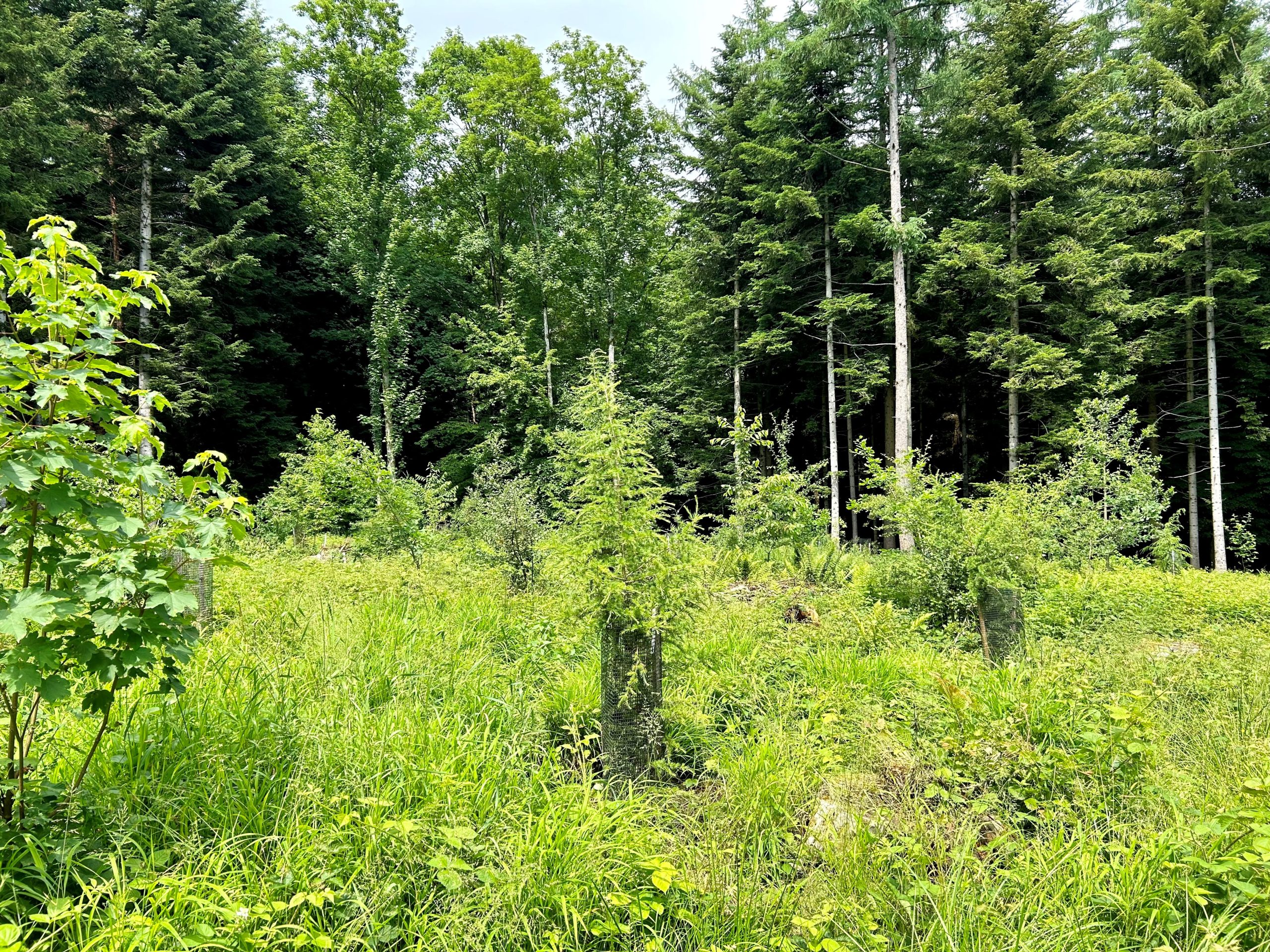
How can we better communicate forest management issues to the public? How can we reconnect forests and people in times of increased alienation? These two questions lie at the heart of Switzerland’s first outdoor Forest Lab called “Waldlabor” – a place for forest research and experiential learning.
It’s a misty Tuesday afternoon in June at the ETH Hönggerberg Campus in Zurich. Participants of our Swiss Integrate Network workshop have geared up in waterproof clothes and are ready for a few more hours of outdoor fun at the so-called “Waldlabor” – a unique forest area on the outskirts of the city. Diverse learning sessions at this 150-hectare mixed broadleaved forest already lie behind us, and we await in anticipation the second round of educational activities.
Zurich’s “Waldlabor”, or Forest Lab, functions as an innovative demonstration and research site – a prototype for public engagement and science communication that we get to experience as part of a full-day programme at the Integrate Network workshop. Together with Martin Brüllhardt, managing director of the Forest Lab, we walk towards one of the entrances of the forest area. He explains that the initiative to bring this project to life originated with WaldZürich, a local association of forest owners.
“There was a need to create a space where forest owners could communicate about managed forests and forest ecosystem services. A place that could offer more exchange between the public, practice, and research”, explains Martin Brüllhardt.
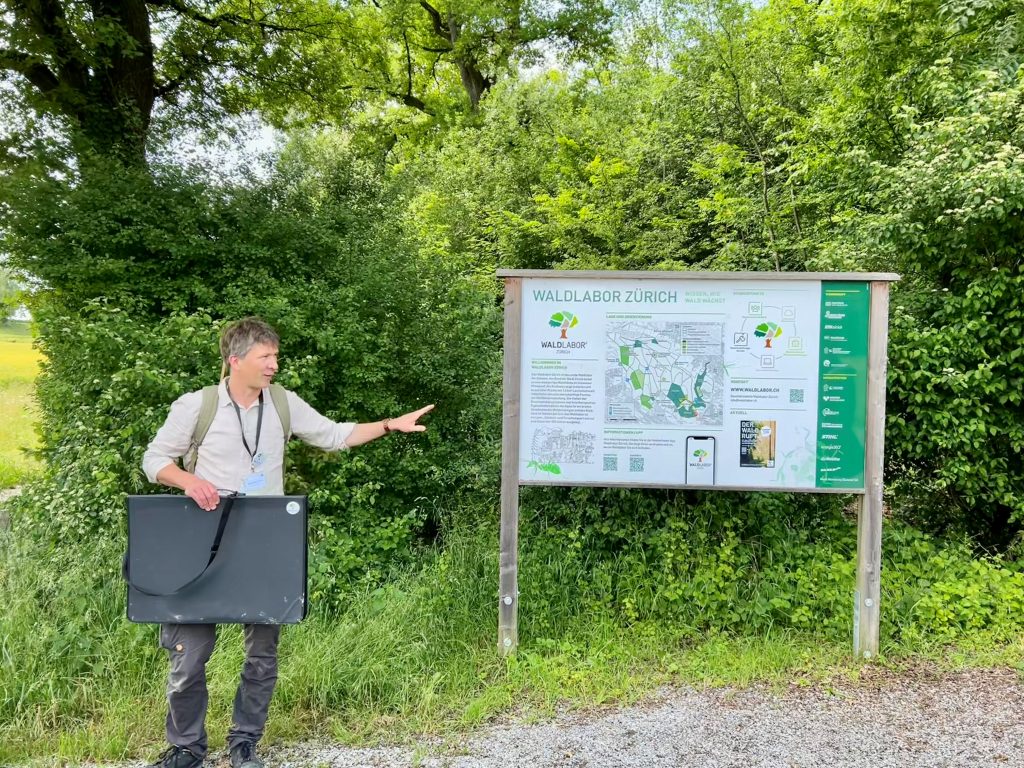
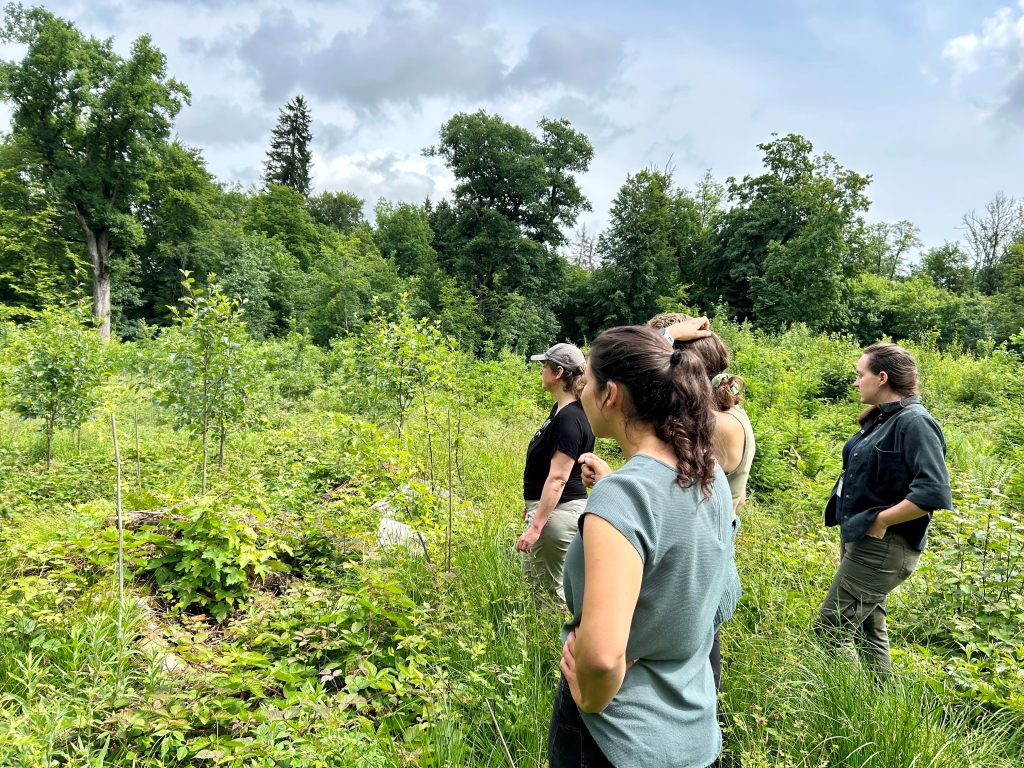
The vision was to create an open classroom, a place for exploration, recreation and research – where visitors can come to, be immersed in the forest, and learn about different types of forest management practices, including historical, current and future ones.
“The Waldlabor is designed as an open research and communication forest – anybody that wants to contribute or tackle a research question is invited to do so”, mentions the managing director.
In 2019, after a year of envisioning and planning, six entities – including ETH Zurich, the Swiss Federal Institute for Forest, Snow and Landscape Research, Green City Zurich, the Office of Landscape and Nature of the Canton of Zurich, and the Association of Zurich Foresters – came together to launch the Waldlabor association. As an initiative, it’s unique in that it is the first real-life laboratory for immersive education and experiential forest research in all of Switzerland.
Open to diverse kinds of research questions, Martin Brüllhardt explains that one aspect the initiative is investing into is the overall designability of landscapes and forests. Asking, how can we better shape forests? And how can we create and showcase respective forest ecosystem services?

The Waldlabor’s five main themes as featured on Fig. 2 in chapter ‘Box C 10 Waldlabor Zürich – the Zürich Forest Lab’ (pp.380-383) of the book How to balance forestry and biodiversity conservation – A view across Europe (2020).
“The idea is to become better at communicating about these issues with real-life examples, both visible to the public as well as other forest managers and owners”, says the managing director of the initiative.
As we visit the forest site, it becomes clear that the Forest Lab hosts many kinds of research projects. Some focus on gaining new insights on climate change and biodiversity, while others explore integrative approaches related to managing habitat trees or deadwood islands.
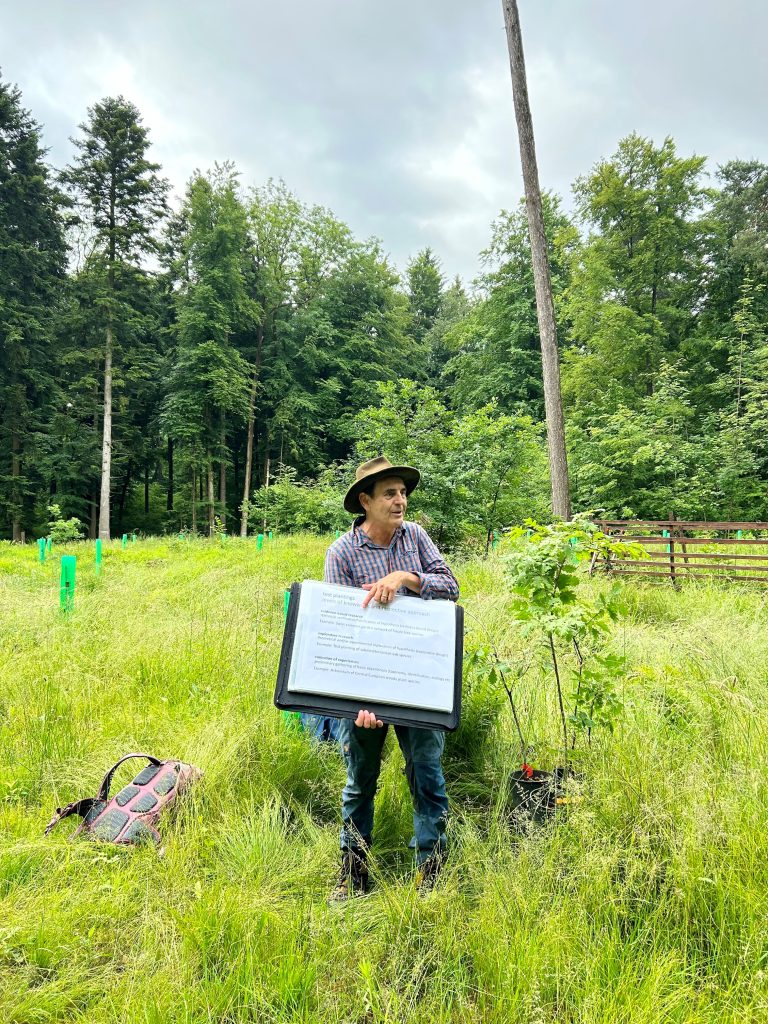
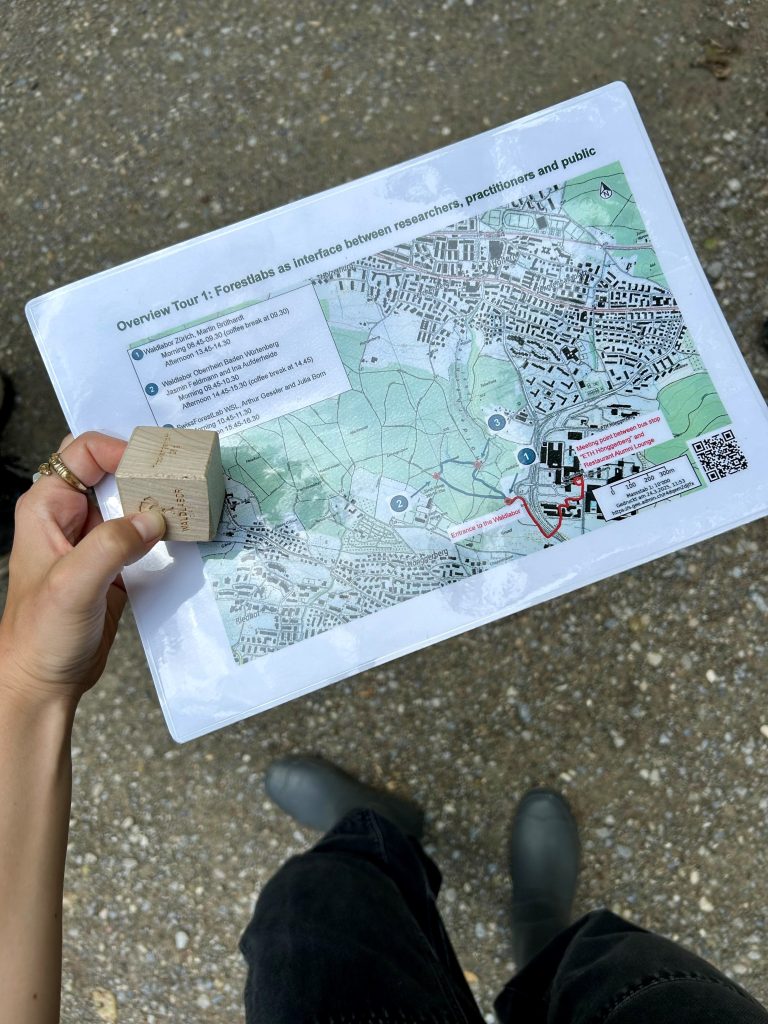
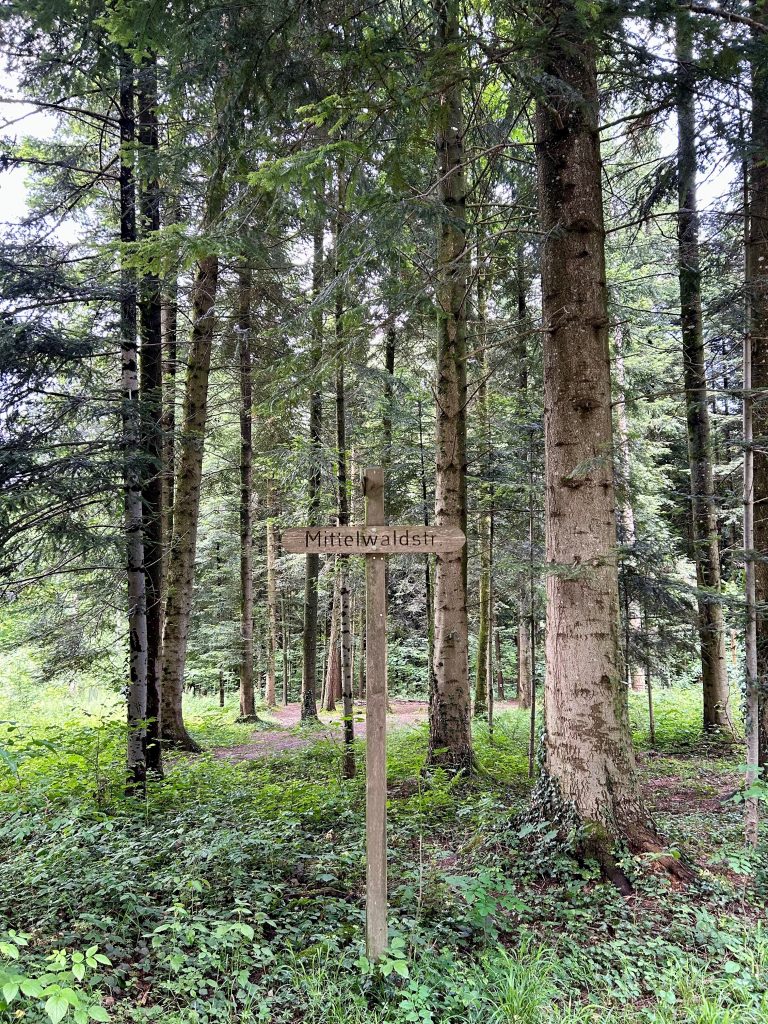
Trying to connect different disciplines, one project currently aims to analyse a huge dataset to better understand how forest ecosystems interact and function. This is called “ecological macroscoping” – a way to study the complexity of ecological systems and the diverse factors that interrelate to shape its whole.
Other projects are of more educational nature and integrate different teaching pedagogies. One example here is a project showcasing species diversity within a collection of mid-European woody species. Other on-the-ground activities highlight the diversity of management schemes and their impact on forests.
“We have this idea to become a kind of dynamic museum of different forest structures as a result of different interventions,” explains Martin Brüllhardt.
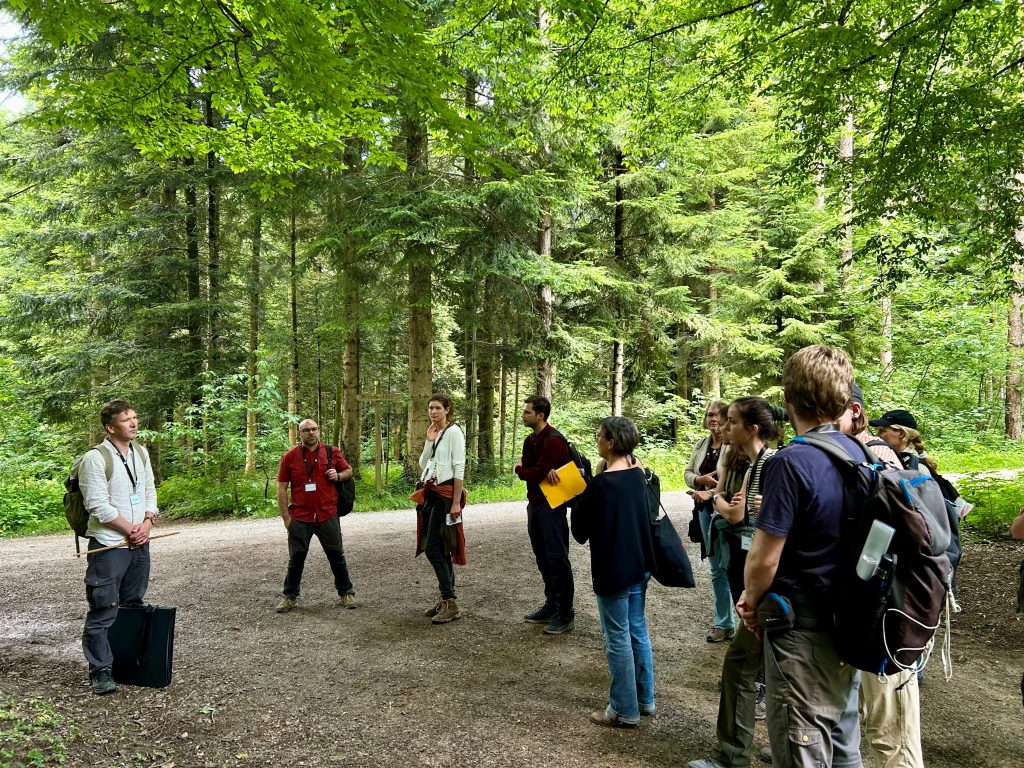
In general, the idea is to continuously increase the number of projects hosted at the forest plot and remain open to new ideas from forest managers, researchers and the public.
With the support of volunteers, the Forest Lab also offers guided tours to both experts and lay audiences. An interactive map is accessible in the Waldlabor-App and makes it easy for visitors to explore the forest area on their own.
Towards the end of the tour, Martin Brüllhardt notes that, as a forest plot that connects both forest production and protection, they only ever cut the amount that annually can also regrow. As such, they hope to ensure and showcase the sustainability of wood production.

Visiting Zurich’s Forest Lab was part of a larger Integrate Network workshop, organized by the Federal Office for the Environment FOEN, ETH Zürich and the Swiss Federal Institute for Forest, Snow and Landscape Research WSL. Read more about the workshop here.