

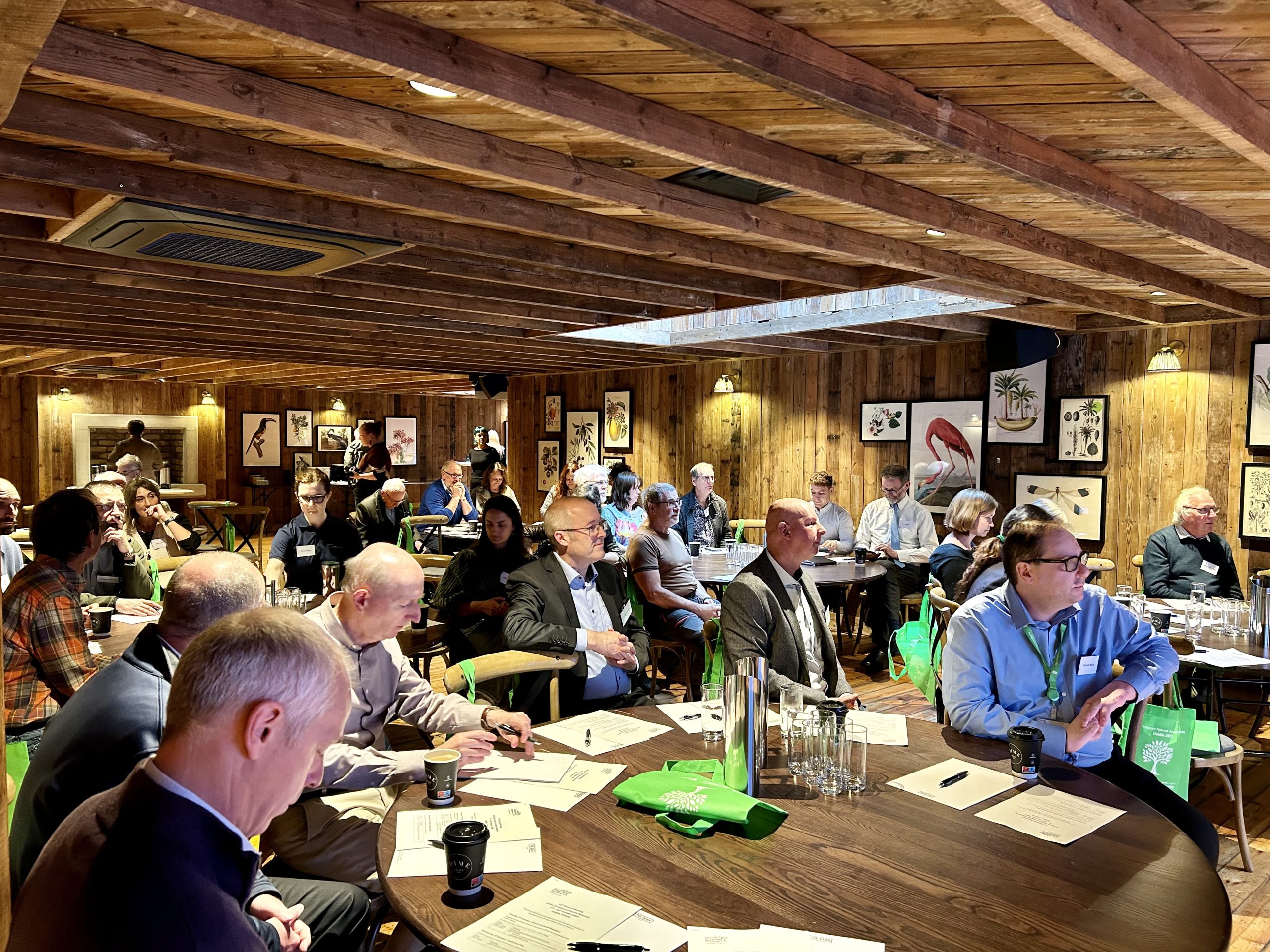
In early October, the Integrate Network representatives gathered in Dublin, Ireland, for their annual meeting – a few autumn days brought together forest owners, researchers, policymakers, and practitioners from across Europe. They came with a shared mission: to learn from each other’s successes and challenges in Integrative Forest Management (IFM) practices.
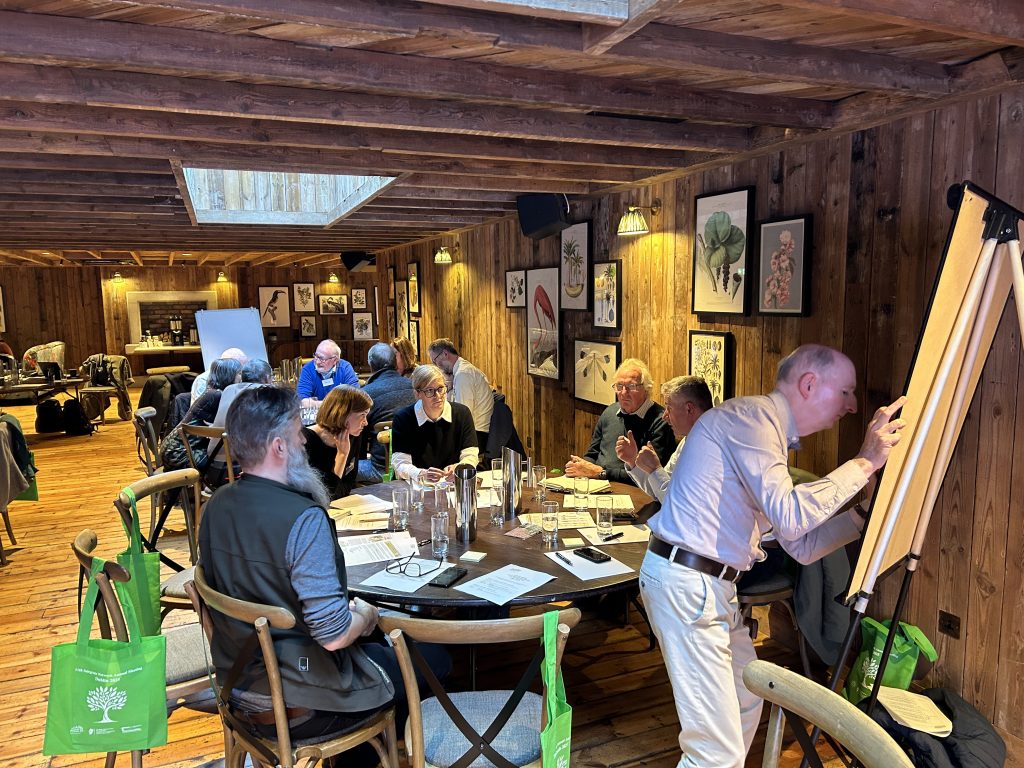
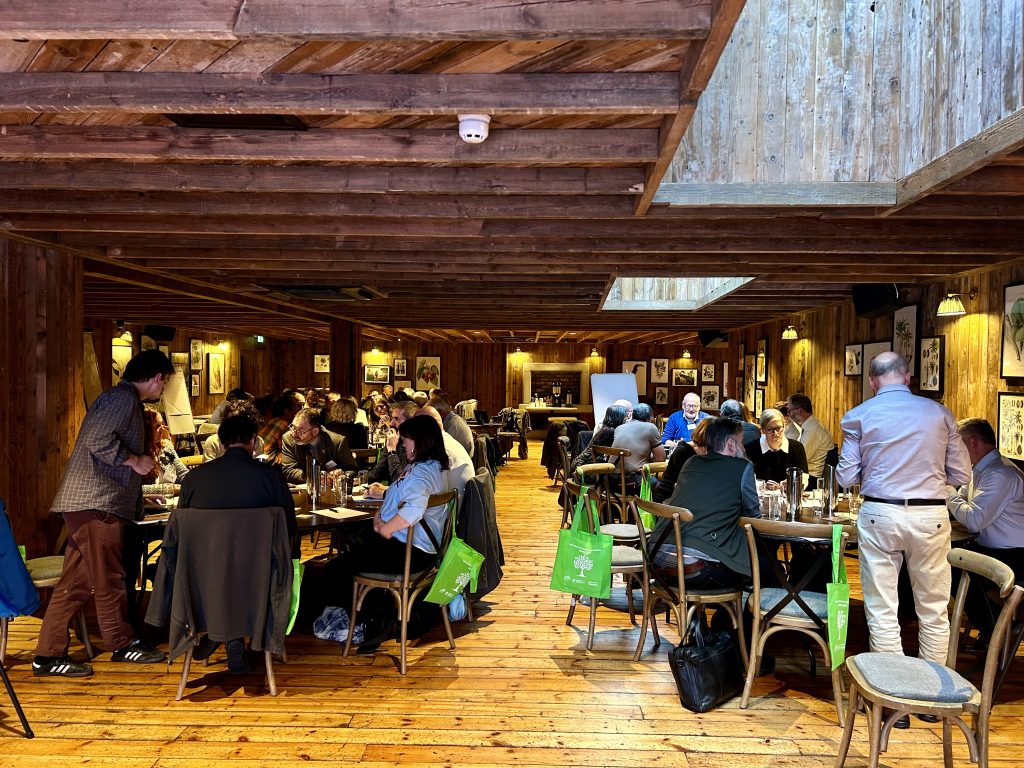
Among the many productive sessions and exchanges, one captured the collaborative spirit of the gathering – an interactive World Café. This participatory method invites people to rotate between small discussion tables, sharing perspectives and building on one another’s ideas as they go. It turns a meeting into a living dialogue, where every voice adds a piece to the bigger picture.
We had five tables, three questions, and one goal: to reflect together on why IFM is needed, what barriers stand in the way of its wider adoption, and how collaboration can help drive progress.
Why – The roots of resilience
When the first question was asked – Why do we apply integrative forest management? – the answer came as a series of insights that rooted back to one word: resilience.
Participants spoke of forests that must endure uncertainty – storms, pests, changing climates, and shifting societal expectations. To strengthen resilience, they agreed, is to ensure that forests can provide multiple goods and services – timber, biodiversity, recreation, clean water – without losing their vitality.
One participant captured it simply: “It’s about balancing production with diversity and all the other ecosystem services society depends on.” Another added that IFM is “a means of compromise” – between societal interests, biodiversity conservation, and the needs of forest owners.
Stories emerged from practice too. A forest owner had started planting oak, “just to do something different,” his peers recounted. This small spark of curiosity became a symbol of innovation – a forest that is more diverse and resilient. It showed how change often begins quietly, with one decision that ripples outward.
And as others noted, IFM is also an act of education: “It’s not just on paper. Everybody can see how it looks outside in the forest.”
What – Between vision and reality
As the conversation turned to practice, the tone grew more grounded. Implementing IFM, the groups agreed, is demanding, held back by limited training, a shortage of skilled contractors, and insufficient financial incentives. The forestry systems in many countries are still “set up for big machines,” which makes closer-to-nature approaches harder to apply. Some raised issues like deer pressure, fragmented ownership, or the need to better adapt IFM to regional contexts where conditions and traditions differ.
“Integrative forest management is more complex to manage,” as the conversation went. “There are more things you have to take into account – and for that reason it’s more costly.”
Yet behind each challenge lies persistence. In smaller forests where hiring a professional was unaffordable, owners learned by doing, guided by peer exchange and shared experience. Participants also discussed the importance of valuing the benefits of IFM – not just timber, but carbon, water, biodiversity, and the social value of healthy forests.
How – Growing together
The final question – How can we collaborate better? – explored the potential of working side by side to support a widespread adoption of IFM.
Forest demonstrations and peer learning were seen as powerful catalysts for change. “If one forest owner plants differently, a neighbour might follow. It takes one person to break the ice,” as one reflection captured.
The conversation grew into a reflection on networks – the need for “champions” who inspire others, and for meetings that bring people together not just professionally, but as a community. Collaboration, participants noted, requires translation – not just between countries and professions, but also for society. “Foresters talk to each other in the same language,” one participant observed. “But society needs to understand us too so that we can show improvements and gain acceptance.”
Inclusion was another key theme: being mindful of local customs, power dynamics, and the ways policies align across EU and national levels. The discussion closed with a clear takeaway: investing in collaboration and education today builds resilience and understanding for tomorrow, avoiding the higher costs of restoration later.
A living conversation
The World Café in Dublin ended with a sense of shared direction. “Why Integrative Forest Management?” one participant reflected aloud. “Because we can. Because it’s possible – and our skills keep growing. We can do it, and that’s exactly why we do it.”
This message lingered in the room long after the discussions ended – as an affirmation of what unites the Integrate Network: the belief that forests, like communities, grow stronger through diversity, dialogue, and care.
And in that shared space – between the forest and the meeting room, between policy and practice – something continued to grow: understanding, trust, and the quiet confidence that IFM remains a living practice, strengthened by dialogue, tested by challenges, and carried forward together.